The client
A multi-brand travel company runs a portfolio of niche travel businesses, each built around a destination, an interest, or a style of travel, from adventure expeditions to tailor-made luxury trips. Across those brands, the company delivers curated experiences to travelers worldwide.
The company’s engineering leadership set out to elevate their digital platforms to the same high standard as their travel experiences. As the business expanded market by market, its legacy Drupal estate had grown incrementally. To modernize, the group outlined a clear mandate: transition each brand to a modern architecture, one by one, with zero downtime for ongoing operations.
The strategy called for real-time search aligned with active inventory, alongside greater autonomy for local publishing teams to manage their markets.
The company scaled their engineering capacity by embedding rtCamp engineers, delivery leads, PMs, and QA directly into their teams. While the company retained full ownership of their roadmap and architecture, rtCamp aligned with their internal workflows to drive execution.
At a glance
ChallengeSolutionOutcomeA decade of custom content to move, with no room for downtime or SEO lossBespoke migration scripts, reused brand-to-brandContent, media, and history intact, old URLs still resolvingOne brand’s presence split across many country domains, each managed on its ownMultisite where consolidation helped, single-site where it fitRegional versions under one parent domainEvery language version was produced by hand, site by siteA custom layer on MultilingualPressWrite once, publish in every marketA search built for a smaller catalog than the brands now carriedNew architecture, reindexed through the daySearch response under 300 millisecondsPages taking about 3.9 seconds to load, slowest on mobileEdge caching and front-end workReported load time reduced from about 3.9 to 1.8 seconds
Moving a decade of content
The program’s central challenge was a high-stakes migration: transitioning each complex brand from a legacy Drupal sites to WordPress, with the critical requirement that no data, media, or history could be compromised during the process. These were large, heavily customized Drupal sites, sometimes twenty or more under a single brand, with years of content and media behind them.
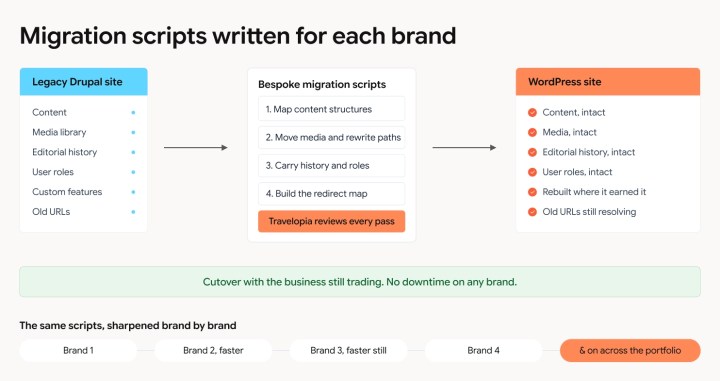
Migration scripts written for each brand
Instead of relying on generic importers designed for basic setups, the team engineered custom migration scripts, refining them across each brand launch. rtCamp engineers did much of that scripting, with the company’s engineers reviewing each pass before it ran. Content, media, editorial history, and user roles came across intact. In similar fashion, every old URL kept working through a redirect map built per brand. A few features earned a fresh build, such as a step-by-step quote builder tied to live pricing.
Each brand launched with zero downtime for business operations. With the content successfully secured, attention turned to determining the optimal site structure required for every brand.
One brand, many country domains
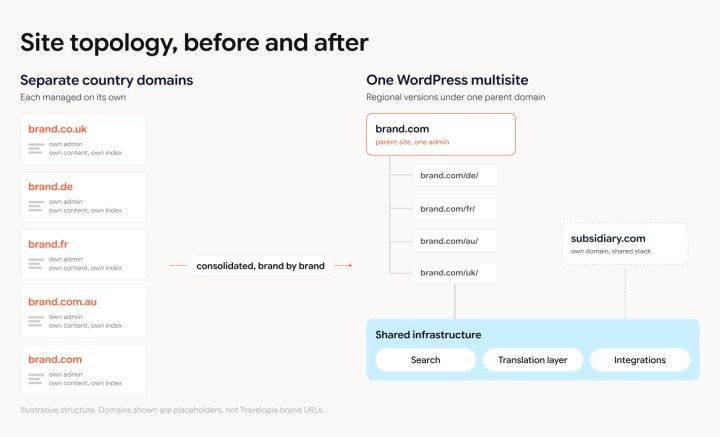
Several brands had grown into separate country-level sites, one per market. The client wanted that regional reach managed centrally, with each brand’s search footprint working as one.
Tailoring the architecture to each brand’s needs
The client decided the topology brand by brand, and rtCamp engineers built and tested each configuration. Where a brand had spread across country-specific domains, the unified team consolidated them into one multisite. Regional versions sit under a single parent domain. Brands without that complexity stayed on a simpler single-site setup. One kept a subsidiary on its domain while sharing the same infrastructure.
Opening a market became a configuration step rather than a new build. Filling that market with content was the next thing the company wanted to speed up.
Boosting marketing agility across global markets
Operating multiple brands across dozens of languages had turned the previous site-by-site production model into an operational bottleneck while on Drupal. Marketing and editorial teams were frequently sidelined by technical hurdles, forcing them to rely on developer support for every publishing update or localization change, which prevented them from moving at the speed of their markets.
A custom layer on MultilingualPress
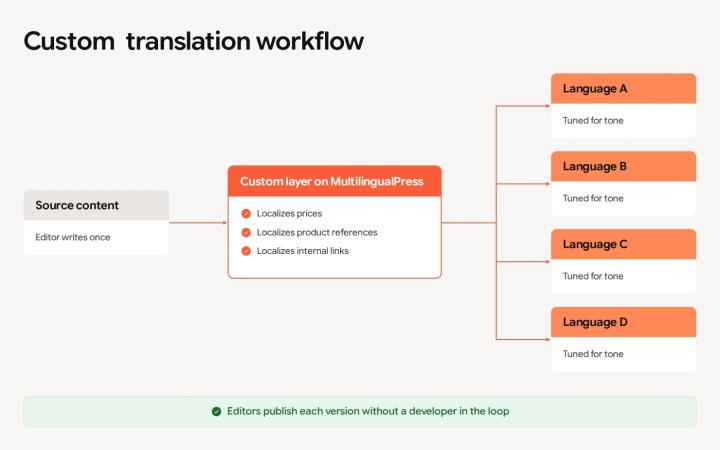
The company chose MultilingualPress as the foundation, and the unified team built a custom layer on top of it. An editor writes once and generates every language version from that source, then tunes each one for tone before publishing without a developer in the loop. Prices, product references, and internal links also now point to the right place for each market.
A block library for campaign pages
Each brand’s design system became a library of ready-made blocks, built out from the client’s design direction. Marketing teams now assemble on-brand pages and launch campaigns using reusable components, including WordPress’s visual site editing on select brands, which removes long-standing technical bottlenecks and allows them to work without waiting on developer support.
With publishing and localization now handled in-house, teams launch regional sites in a fraction of the time, allowing the client to shift focus to customer experience.
Making search fast and current
Search is among the most-used features on every brand site, so the company put it near the front of the queue. The legacy search infrastructure was designed for a much smaller catalog, causing queries to lag by several seconds as inventory expanded and leading to search results falling out of sync with real-time data.
A rebuild for speed and freshness
The search feature was completely redesigned around targets set by the client’s product teams, bringing response times down to under 300 milliseconds. Automated reindexing scheduled throughout the day keeps presented inventory aligned with live offerings. Search results and filters dynamically adjust as users refine their queries, thereby eliminating zero-result filter options.
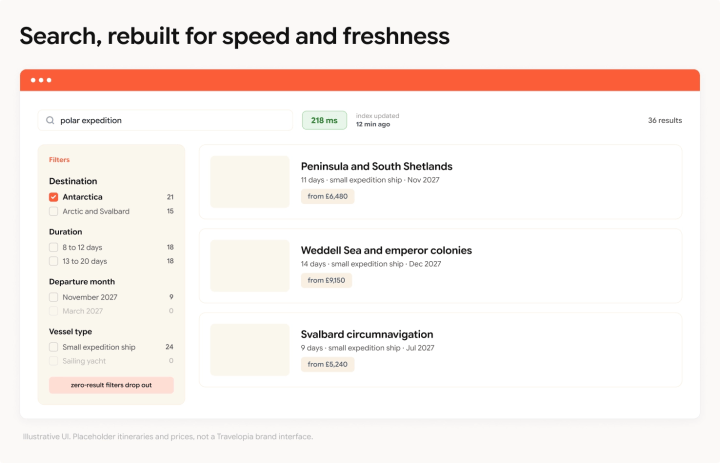
Additionally, select brands introduced typo-tolerant matching for broad queries, while another implemented a side-by-side option comparison tool.
These upgrades transformed search from a bottleneck into a high-speed discovery tool with real-time inventory relevance across every brand market.
A partnership built for the next launch
Across the brands that have moved, the changes hold consistently.
- Pages that used to load in about 3.9 seconds now load in about 1.8 seconds.
- Mobile performance scores moved from the low twenties into the sixties, and search answers in under 300 milliseconds.
- Marketing teams launch campaigns without developer time, and a new regional site takes a fraction of the effort it once did.
- Behind each site, the integrations keep product, pricing, and availability current and route customer inquiries to the right team.
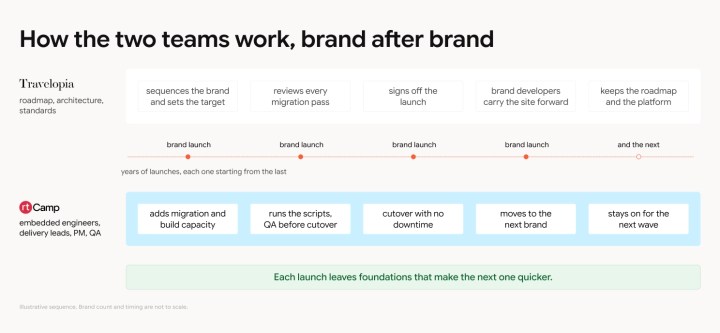
Much of that pace comes from how the unified teams work. rtCamp’s engineers, delivery leads, and QA sit inside the client’s teams and work to its standards. They add senior capacity when the roadmap calls for it, and each finished site stays with the client’s own developers to carry forward.
Years in, it is the model the client keeps returning to, and each launch leaves foundations that make the next one quicker.
Resources:
– Drupal vs WordPress comparison guide
– Drupal to WordPress migration guide
CMS Migration Planning Workbook
Δ
Full Name(Required)
Organization Name(Required)
Work Email(Required)
Book a Free 30-Minute Discovery Call
Book a 30-min review call
By submitting this form, you acknowledge rtCamp’s Privacy Policy.
SEND MY WORKBOOK
Related case studies
-
Multisite VIP Migration and Codebase Audit for KHM Travel Group
Solution
Hosting Migration
Industry
Tourism and Hospitality
-

Drupal to WordPress Migration Success Story: FleetNet America
Solution
WordPress Migration
Industry
Automotive