David Levine wears many hats – as the maintainer of Abilities API in WordPress Core, an advocate of practical, hype-free AI integration in the WordPress Core AI Team, and Director of Growth Engineering at rtCamp. At WordCamp US, David had a clear window into what developers, site owners, contributors, and others across the WordPress community were thinking about AI and its future.
At rtCamp, he spends plenty of time working with the marketing and engineering team to address friction points that affect our users and the broader WordPress community. We sat down with him after the event to unpack those conversations and his valuable takeaways.
Babita: Hey David, thanks for joining us. Can you tell us about yourself, your involvement in this year’s WordCamp US, and how it all connects to rtCamp?
David: Hello. I am David Levine. I am one of the official maintainers of Abilities API in WordPress core, actively working with the Core AI team, and Director of Growth Engineering at rtCamp.
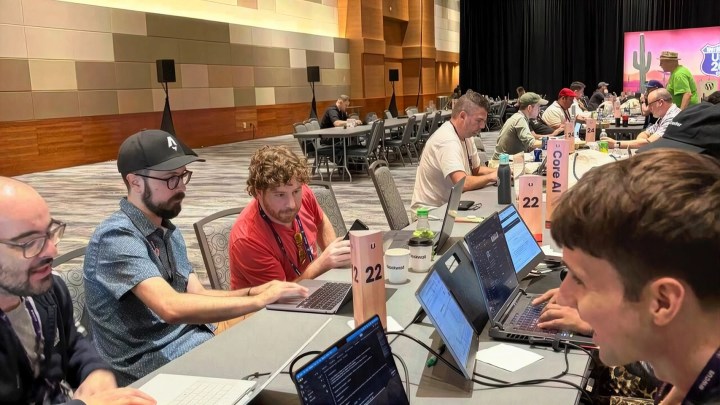
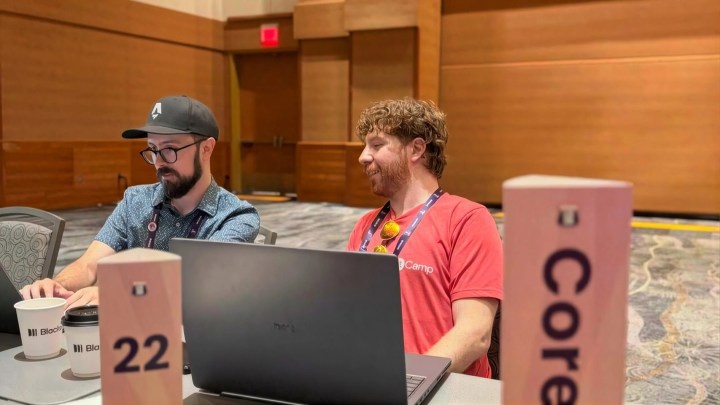
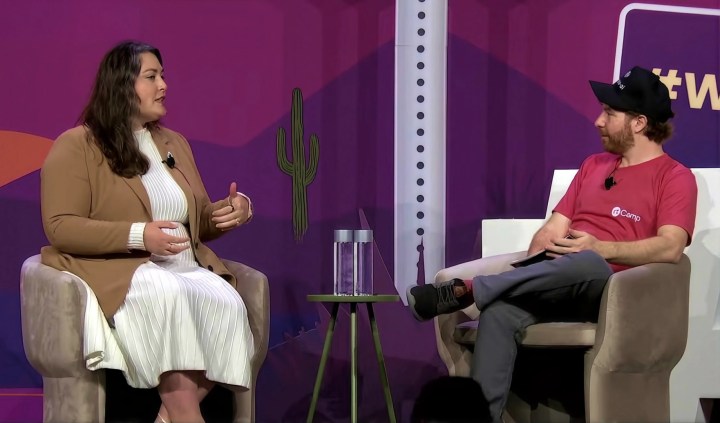
At the start of WordCamp US, I had the privilege of being a Table Lead for the WordPress Core AI Team at the Contributor-Day Hackathon, and on the last day of the conference, I got to interview Waymo’s Amanda Ventura at the Keynote Fireside Chat. The rest of my time was spent non-stop talking and listening to folks about all things WordPress and AI, at meals, meetings, in hallways, but especially volunteering behind the Core AI “Prompt Bar”, a new initiative that we organized for the conference.
Growth Engineering at rtCamp starts with the idea that the product we’re trying to “grow” is WordPress. Most of our work goes into identifying the underlying sources of friction experienced by our clients and the broader WordPress ecosystem so we can address them at their root.
Babita: That’s great! Can you tell us a bit more about the Core AI Prompt Bar?
David: It started as a selfish joke I made to myself during WordCamp Europe, a few weeks before: what if instead of running around from booth to booth trying to get folks to share their thoughts on AI in WordPress, I could just sit down and make them come to me. But then Rahul, our CEO, encouraged me to reach out to the organizing team, and they were all super receptive to the idea, and suddenly there was a whole group of other WordPress contributors volunteering to help prepare and take a shift at the Prompt Bar.
That’s not to say that it was all smooth sailing. We were working on the Prompt Bar right up until the event, and the pivot from Contributor Day to Hackathon was a bit of a curveball. I’m amazed at how well it all came together and grateful for all the support and enthusiasm from everybody, and the amazing conversations I was able to be a part of.
…Although even with the booth, I didn’t actually get to sit down all that much.
Babita: Interesting. How was it to be AI Table Lead for a WordCamp Hackathon?
David: This was only my second time as Table Lead for a WordCamp Contributor Day. My first was in June at WordCamp Europe, and our AI Table had the largest, or second largest, turnout at the event. Which was very exciting, if not totally surprising. AI – and the work we’re doing on the Core AI Team – is a broad area that touches on many aspects of WordPress development and usage, so it means something a little different to everyone. Most of my work for that Contributor Day was acting as a traffic controller of sorts, listening to participants about what part of “WordPress and AI” interested them and then directing them to the relevant parts of the project they could contribute to or learn more about.
I think that broad interest – and relevance – in AI is part of what prompted the organizers to shift WordCamp US’s typical Contributor Day format to a Hackathon. It’s not for nothing that more than half of all the projects at the Hackathon were related to AI in some way. Directing participants to the right projects based on their interests and skills was baked into the role. Then, I and my co-leads spent the rest of the day circulating among the tables and projects, providing guidance, brainstorming and rubber-ducking ideas, listening to everyone’s goals, interests, frictions, and feedback, and when needed shepherding and unblocking their work to keep the momentum going.
At the end of the hackathon, I won the “How Did You Even Find This?” Award, although I’m not sure whether it referred to something I found or if I am the thing that was found. Ironically, I later lost that award in the hotel lobby.
Babita: So out of everything built, what were some of the projects that stood out to you?
David: There were a few interesting projects at the hackathon that caught my eye, though from an end-user perspective, I’m probably most excited about the work done to bring vector-powered semantic “Smart Search” capabilities to WordPress, since that’s one of the easiest lifts for site visitors that takes direct advantage of AI and the work we’re doing on the Core AI Team. It improves retention and conversion by helping users – and their agents – find relevant content more efficiently, but most site owners don’t even think about it even as they’re actively trying to find ways to “benefit from AI” on their sites.
Also, while I’m a bit biased here, I absolutely loved Aviral’s demo of the AI-powered Editorial Experience our team has been working on. I’m a big believer in holistic solutions, so seeing how the same guardrails and tools that help our clients create branding-consistent content can also be leveraged by AI models to maintain consistency and quality was incredibly exciting. And being able to work visually from within Claude instead of task-switching back-and-forth between the WordPress Admin reduces a huge point of friction for users and really speeds up their workflow.
But even more than these and all the different projects and product demos I saw, what stood out to me most were all the “throwaway apps” people were building. Small, disposable codebases, meant solely to solve a very unique problem, in a very opinionated way. This form of hyper-personalization is fascinating to me as it offers a new way of thinking about software and product development, and I’m excited to explore how these behavioral shifts will shape consumer expectations and how we build solutions that ensure the high levels of reliability that our enterprise clients need.
Babita: Fair enough, so behind the Prompt Bar, were there themes and questions that kept coming up?
David: Oh gosh, so many. For starters, so many folks shared that they felt they were “behind the curve” when it comes to AI adoption. The amount of hype out there and social-media LARPing in the various tech communities makes it easy to feel like you’re constantly playing catch-up.
It seems that the same misconceptions that cause fear and hesitation at one end of the horseshoe can lead to FOMO-levels of adoption on the other, and walking folks through the basics of how AI works – both within and outside of WordPress – was enough to ground folks and give developers and site owners a clearer path forward for adoption.
Babita: Was there a conversation or takeaway that surprised you – or changed how you’re thinking?
David: The thing I was most surprised by is the amount of traditional automation that many teams and sites still aren’t leveraging, even as they rush to adopt AI solutions. It’s like running before you can walk.
I like to joke that the best thing about AI is all the traditional automation people are finally starting to invest in and adopt. And building AI or agentic functionality on top of traditional automation is a lot more effective and powerful than trying to get a non-deterministic AI to behave like a deterministic workflow.
Look at the work your team is doing manually, and ask yourself what you can automate. Then evaluate whether AI’s nondeterministic abilities are the ideal solution for the workflow, or if you can achieve the same results with more predictable, traditional automation. You can even use AI to build it, turning the token costs into a one-time investment instead of a recurring usage cost.
Babita: That brings us to the future of the ecosystem. Where do you see AI in WordPress heading, and what should developers and site owners be thinking about?
David: A rising tide raises all boats, but also all sorts of flotsam too. AI-induced bugs, supply chain attacks, and slop masquerading as functionality are risks that affect everyone, but the blast radius for enterprises when something goes wrong is a lot higher than for small-scale passion projects. Think about your workflows and processes carefully, and the fundamental architecture and guardrails that will help you maintain quality and keep work on track. A 1-degree misalignment in approach starts off minor but quickly compounds at the speed AI enables, so investing in and automating best practices and quality guardrails is the difference between building features and solutions you can responsibly push out to your users and a growing number of prototypes that look great in a demo but never reach production.
WordPress continues to be the best open-source CMS out there, for businesses and enterprises who actually need a CMS, WordPress remains unparalleled. From the Core software side, we’ll continue building the primitives and underlying functionality to power whatever innovative projects and integrations people come up with, whether those are AI-powered features or those that were unimaginable or unfeasible until AI reduced the cost of entry. I’m particularly excited for what the team is cooking up for WordPress 7.2 in December, and am looking forward to sharing more about it soon, once the roadmap is finalized.
Babita: That puts everything into perspective. David, thank you so much for all the brilliant insights!
Closing note
After a great chat with David, one thing we’re taking away is that AI has plenty of potential in WordPress. There’s a lot of excitement around it, but there’s also some noise. The Hackathon alone showed us different ways people are experimenting with AI in WordPress. David and the Core AI Team are being intentional about not simply adding another AI layer to existing workflows. At the same time, wherever it can make things easier and more efficient, there’s every reason to utilize it, judiciously.
And with so much still to explore we’re now counting down the days to see what’s next for AI in the WordPress ecosystem.
Closing note
On this page
WordPress AI, Artificial Intelligence
Credits

Babita Manna
Author
Babita Manna
Author
Babita is a writer and an editor on the marketing team at rtCamp. She has been part of the open source ecosystem for some time now and has grown fond of the ideas and communities that make it what …

Aviral Mittal
Editor
Aviral Mittal
Editor
Aviral Mittal is the Chief Marketing Officer at rtCamp, where he established and leads the marketing function, building and growing a team of 20+ specialists across content, SEO, design, and growth…
Contributions and Updates: David 
Related articles
-
WordCamp Asia 2026: How rtCamp is showing up in Mumbai
Events
-
WordPress 6.9 “Gene” : 50 rtCampers contribute to 34th consecutive release
Releases
Comments
Leave a Reply Cancel reply
Name*
Email*
Comment*
Submit
Δ