Enterprise WordPress readiness assessment
Score your organization across 6 dimensions, find the gaps, and get a recommended migration path before those gaps become post-launch problems. It takes 15–20 minutes, on your own or with your team.
Enterprise WordPress readiness assessment
Score your organization across 6 dimensions, find the gaps, and get a recommended migration path before those gaps become post-launch problems. It takes 15–20 minutes, on your own or with your team.
0 of 20 answered
— / 100 pts
— / 100 pts
0 of 20 answered
- Organisation snapshot
- Security & hosting Section 1 0 of 4
- Scalability Section 2 0 of 3
- Editorial workflow Section 3 0 of 4
- Integration complexity Section 4 0 of 4
- Governance Section 5 0 of 3
- Team WordPress familiarity Section 6 0 of 2
Organisation snapshot
Fill this in first. It sets context for every section that follows.
Company / brand(s)
Current CMS platform
Number of sites / sub-sites
How many properties are in the scope.
Monthly traffic (approx.)
Pageviews or sessions per month.
Target go-live
Primary migration driver
Select a driver License renewal Platform EOL Cost reduction Marketing speed Acquisition Other
Owner of this assessment
Role
Section 1
Security & hosting
Weight: 20 pts · 4 questions
Enterprise WordPress requires infrastructure that matches enterprise compliance requirements. This section evaluates whether your current or target hosting environment can support a governed WordPress deployment at scale.
Question 1 What is your current or planned hosting environment for WordPress?
Shared hosting or basic managed WP (e.g. WP Engine starter, Bluehost) VPS or self-managed server (e.g. AWS EC2, DigitalOcean without orchestration) Managed enterprise hosting (e.g. Kinsta, Pantheon, Pressable) with no VIP WordPress VIP or equivalent enterprise-grade managed platform (SOC 2, DDoS protection, 24/7 monitoring)
Question 2 Does your organisation have documented compliance requirements (SOC 2, GDPR, HIPAA, or equivalent)?
No documented requirements and no current audit programme Requirements exist informally but are not mapped to infrastructure Requirements documented; current CMS partially meets them Requirements documented and fully mapped; vendor compliance verification is part of procurement
Question 3 How is authentication and access control managed today?
Shared credentials or no formal access control policy Individual accounts but no SSO or MFA enforcement SSO implemented (e.g. Okta, Azure AD) but not enforced across all systems SSO + MFA enforced organisation-wide; role-based access control documented
Question 4 How are WordPress plugins evaluated before installation (or how will they be)?
No formal process — plugins installed as needed Informal review by a developer but no documented criteria Checklist-based review (last update, active installs, known vulnerabilities) Structured vetting: vulnerability DB check + CI/CD-gated install + quarterly audit
Section 2
Scalability
Weight: 15 pts · 3 questions
Scalability on enterprise WordPress is an infrastructure and architecture question, not a platform question. Penske Media serves hundreds of millions of pageviews monthly on WordPress. Cox Automotive runs 8 brands on a single governed multisite. The constraint is always implementation, not the platform.
Question 5 What is the peak traffic load your WordPress environment needs to support?
Under 100K pageviews / month with no significant traffic spikes 100K–500K pageviews / month; traffic is predictable 500K–5M pageviews / month; some traffic events (campaigns, product launches) 5M+ pageviews / month or significant unpredictable traffic spikes requiring auto-scaling
Question 6 Do you need to manage multiple sites or brands under one platform?
Single site, single brand 2–3 sites with independent codebases 4–8 sites; some shared components but no unified governance framework 8+ sites or brands; require shared governed codebase (OnePress-equivalent multisite architecture)
Question 7 Is a CDN and object caching layer in place or planned?
No CDN; caching not configured Basic CDN (e.g. Cloudflare free tier); page caching only CDN + full-page cache + basic object caching configured CDN + object cache (e.g. Redis) + CDN cache invalidation rules + performance monitoring baseline
Section 3
Editorial workflow
Weight: 20 pts · 4 questions
If changing an author name or updating a metadata field requires a developer ticket, that is a platform architecture problem, not a staffing problem. This section evaluates whether your editorial requirements can be met by a properly governed Gutenberg implementation.
Question 8 Can marketing or editorial teams currently publish or update content without developer involvement?
No — almost every content change requires a developer or IT ticket Partially — basic edits possible, but layout changes, metadata, or new page types require dev Mostly — editors can handle the majority of tasks; edge cases need dev involvement Yes — editors publish, update, and build new pages independently using governed components
Question 9 Is a reusable component or block library available to editorial teams?
No — each page or campaign is built from scratch Templates exist but are not governed; inconsistency is common Component library in place but not enforced; editors can override design Governed Gutenberg block library with design lockdown; editors build from approved patterns only
Question 10 Does your organisation require multi-step content approval workflows?
No formal approval process Informal approval via email or Slack before publishing Single-step approval required (one approver before publish) Multi-step approval required for specific content types (legal + editorial + publish)
Question 11 How complex are your multilingual or localisation requirements?
Single language, no localisation 2–3 languages; translation managed manually or via basic plugin 4–10 languages with separate editorial workflows per locale 10+ languages / locales with geolocation rules, regional permissions, and locale-specific components
Section 4
Integration complexity
Weight: 20 pts · 4 questions
Unknown integrations are the leading cause of post-launch failures. This section inventories your integration surface. Every undocumented integration is a migration risk.
Question 12 How many third-party systems does your CMS currently connect to (CRM, MAP, DAM, search, analytics, SSO, personalisation)?
1–2 integrations (e.g. GA4 + contact form only) 3–5 integrations; all documented 6–10 integrations; most documented; 1–2 with unclear ownership 10+ integrations including custom APIs, DAM, personalisation layer, or SSO; full inventory complete
Question 13 Do you have an active DAM that must connect to WordPress?
No DAM; media is managed in the CMS media library only DAM in use but not integrated with CMS (manual upload workflow) DAM integrated with current CMS; migration path to WordPress not yet scoped DAM integration scoped and documented; WordPress connector or custom integration planned
Question 14 Do you use CRM or marketing automation that requires form-to-CRM data flow from WordPress?
No CRM or marketing automation in use CRM in use but not connected to website forms Basic form-to-CRM connection in place (e.g. HubSpot or Mailchimp embed) Salesforce / Marketo / Pardot / Eloqua integration with Gravity Forms; field mapping documented
Question 15 Does your team have a documented integration inventory with carry-over decisions for each system?
No inventory exists Partial list; ownership of several systems is unclear Most integrations listed; carry-over decisions pending for 2–3 systems Full inventory complete; each integration has a carry-over decision and a named migration owner
Section 5
Governance
Weight: 15 pts · 3 questions
Governance is what separates a WordPress site from a WordPress platform. Without it, editors break the design system, plugin debt accumulates, and the platform requires rebuilding every three years. Governed platforms survive acquisitions, brand consolidations, and leadership changes.
Question 16 Are content roles and publishing permissions formally defined and enforced in your current CMS?
No formal roles — most users have admin or editor access Basic roles defined (admin / editor / author) but not mapped to organisational structure Roles mapped to org structure; some custom permissions in place Granular role-based permissions enforced; custom roles per content type or brand; SSO-synced
Question 17 Is there a defined process for adding or updating WordPress plugins across your environment?
No process — plugins are installed ad hoc Informal process (developer judgment, no documentation) Documented criteria for plugin selection; no automated enforcement Documented process + automated vulnerability scanning + CI/CD-gated deployment + quarterly audit
Question 18 Do you have a design system or component governance model that governs how pages are built?
No design system; every page is built differently Brand guidelines exist but are not enforced in the CMS Reusable templates or components in place but editors can override Design system enforced via locked Gutenberg patterns and synced templates; deviation requires admin override
Section 6
Team WordPress familiarity
Weight: 10 pts · 2 questions
Enterprise WordPress is not WordPress out of the box. The platform requires governed architecture, controlled customisation, and workflows designed for scale. Team familiarity affects migration risk, handoff quality, and long-term platform ownership.
Question 19 How familiar is your engineering team with enterprise WordPress architecture (VIP, multisite, Gutenberg block development, governed deployments)?
No internal WordPress experience Basic WordPress familiarity (themes, plugins, admin) but no enterprise architecture experience Solid WordPress development capability; limited VIP or governed multisite experience Enterprise WordPress experience including VIP deployments, custom Gutenberg block development, and multisite governance
Question 20 Is an internal training and onboarding plan in scope for the migration?
Not yet considered Informal knowledge transfer planned but not scoped Training included in project scope; format not yet defined Role-specific training scoped (editor, developer, admin); recorded workshops and documentation as delivery deliverables
Back
ContinueSee my results
Your readiness score
What your score means
Answer all 20 questions across the 6 dimensions above. Your readiness score, level, and gap analysis unlock here once every question has an answer.
/ 100 pts
Strong foundation. Enterprise WordPress is a low-risk transition for your organisation.
Recommended path: proceed to a scoped pilot. Start with a 20-hour platform audit — free, and bounded.
Core capabilities are in place. 2–3 dimensions need targeted work before or during migration — most successful migrations start exactly here.
Recommended path: address priority gaps in parallel with migration planning. Book a 30-min validation call.
Significant gaps in 3+ dimensions. Migration risk is high without a structured readiness programme.
Recommended path: start with an Architecture Audit. Prioritise security, governance, and hosting baseline.
Foundational requirements across most dimensions are unmet. Attempting migration now would compound existing problems.
Recommended path: book a discovery call. Define a 90-day readiness roadmap before any migration scoping.
Dimension breakdown
Security & hosting
/ ·
Scalability
/ ·
Editorial workflow
/ ·
Integration complexity
/ ·
Governance
/ ·
Team WordPress familiarity
/ ·
Gap analysis
Dimensions marked gap need to be resolved before or during migration. Partial dimensions need targeted work. Strong dimensions are ready.
Security & hosting
Hosting unfit for enterprise traffic or compliance. Prioritise a VIP / managed migration path.
Managed hosting in place but compliance gaps remain. Address SOC 2 / SSO before launch.
VIP or equivalent in place. Compliance documented.
Scalability
Architecture cannot support planned traffic or multisite. Requires re-architecting before migration.
Caching and CDN in place; multisite architecture not yet defined.
Proven at scale. Multisite / headless approach defined.
Editorial workflow
Editors cannot publish without developer involvement. Gutenberg implementation and block library are migration prerequisites.
Block library in progress. Some editorial tasks still require dev tickets.
Editors publish independently. Governed Gutenberg implementation in place.
Integration complexity
Critical integrations undocumented. Map DAM, CRM, and SSO as a discovery output.
Core integrations mapped. 1–2 complex dependencies (DAM, personalisation) need scoping.
All integrations documented with a carry-over decision made.
Governance
No governance model. Content roles, approval flows, and design guardrails must be defined before launch.
Basic roles in place. Multi-step approvals and design lockdown not yet implemented.
OnePress or an equivalent governance framework active.
Team WordPress familiarity
No internal WordPress capability. Training and documentation must be scoped as a migration deliverable.
Basic familiarity present. VIP-level architecture and Gutenberg governance need structured onboarding.
Internal team confident with enterprise WordPress. Onboarding is optimisation, not foundation.
NEXT STEP
Get your readiness report by email
We’ll send you your score and gap analysis. Share it with your team, or walk through it with an rtCamp architect on a free 30-minute call. On the call, we’ll check your scores against what we see across 300+ migrations, flag the gaps teams usually underestimate, and recommend where to start.
Related services
solution
Automate content operations, improve AI visibility, and build personalized experiences with AI
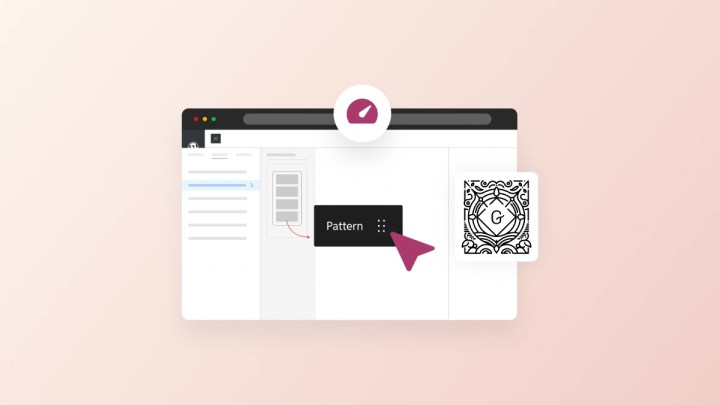
solution
Modernize legacy WordPress platforms into AI-ready, governed infrastructure built to last a decade
Want to try a different scenario?
Reset assessment
Reset the assessment? All answers and snapshot fields will be cleared.
Back
Clear my answers
Δ
Full Name(Required)
Organization Name(Required)
Work Email(Required)
Book a Free 30-Minute Discovery Call
Book a 30-min review call
By submitting this form, you acknowledge rtCamp’s Privacy Policy.
Send my readiness report